Sunday, July 30, 2023

Be Seeing You

*This post was taken from my final Sunday sermon at the Church of the Good Shepherd in Asheboro, NC.


'Jesus put before the crowds another parable: “The kingdom of heaven is like a mustard seed that someone took and sowed in his field; it is the smallest of all the seeds, but when it has grown it is the greatest of shrubs and becomes a tree, so that the birds of the air come and make nests in its branches.”

He told them another parable: “The kingdom of heaven is like yeast that a woman took and mixed in with three measures of flour until all of it was leavened.”

“The kingdom of heaven is like treasure hidden in a field, which someone found and hid; then in his joy he goes and sells all that he has and buys that field.

“Again, the kingdom of heaven is like a merchant in search of fine pearls; on finding one pearl of great value, he went and sold all that he had and bought it.

“Again, the kingdom of heaven is like a net that was thrown into the sea and caught fish of every kind.' 

--Matthew 13: 31-33, 44-47


Good Shepherd, Asheboro


I wrote my first sermon in Asheboro at a desk built into the wall of a house on Middleton Circle in which I lived for just four months. I wrote my last sermon in Asheboro at the Black Powder Smokehouse, a barbecue place on Fayetteville Street that didn’t even exist when I first came here. In the eight years, two months, and one week between them, I’ve learned quite a bit, but one of the most significant is a lesson found right there in our Gospel this week: small things matter.


The first words out of Jesus’ mouth in the Gospels is that the Kingdom of Heaven has come near. If I asked you what is the Kingdom of Heaven I suspect most of you – most Christians, in general – would say that it’s the place we go when we die. Yet Jesus never talked about what happens when we die, instead he talked about the present reality, and in this case the reality of the Kingdom of Heaven being right here, right now, and at the same time still to come. It’s what we call an already-not yet. Jesus being in the world is evidence enough that the Kingdom is already here, and yet we also know that it is has not yet reached its fullest manifestation. And this Kingdom, according to Jesus, can be compared, not to something fancy or strong or clean. This Kingdom starts small and is unassuming, but with time, with patience, with love, it grows and grows. Small things matter.


Simple intentions, brief encounters at the right moment become, with time and care, the fruits of such a Kingdom. Jesus is a brilliant teacher because he uses metaphor and hyperbole and turns established ways of thinking on their heads – long before Rian Johnson did it to Star Wars or Zack Snyder to the DC Universe, Jesus of Nazareth was subverting expectations. 


A mustard seed isn’t the smallest seed on Earth, nor does it grow into a tree. It’s tiny, yes, but it becomes more of a shrub and not exactly pleasant to the eye. Yet it is from this tiny, unassuming seed, that the Kingdom can grow, and it is to this unattractive shrub – not the mighty oak of empire – that the people will flock.


Yeast takes a while to be leavened, but three measures of flour is a lot. It’s going to take that woman a good long while to knead it all. Sometimes the Kingdom, Jesus is saying, requires time and patience. The New Interpreter’s Bible offers a modern day analogy for this parable: the Kingdom of Heaven is like a preacher who has a congregation of 25 in a city of two million, and keeps preaching until everyone hears the Good News. 


A man buries something that he doesn’t even know is a treasure. It seems, at first, insignificant, but joy abounds when he realizes its worth, despite the fact that he did not even know that he wanted in the first place. So he digs it up and buries it again for the fun of finding it once more. How exciting the Kingdom must be, if it’s worth rediscovering over and over again!


A pearl so precious, so lovely, that someone would give away everything they had just to possess it. No material object could be that valuable, and no one would say that’s a sound financial decision. Except maybe Jesus.


A net is cast into the sea, and shimmering fish of all sorts get hauled in. Such is the Kingdom. Such is Jesus.


The smallest of seeds, the most hidden of treasures, and fish of every kind reveal God’s bounty. What a wealth of wonders the Kingdom is, and it’s all right here, in the smallest details. No, y’all, the devil isn’t in the details, Jesus is! Right there, hidden under our chins, so ordinary, so precious, and do you know what? – he keeps showing this Kingdom to us!


Pink bows that popped up all over town after the tragic death of our beloved Laura Lisk in 2016 led to a foundation set up in her name, to give opportunities to the very people whom she sought to love and serve in life. That’s a mustard seed growing into something mighty.


For folks to keep decrying sin of racism in our community and calling on those in authority to remove a monument that has too long been a symbol of hate, despite no actions from those authority figures and continued aggression from that symbol’s supporters, seems a daunting task. Why bother? Still, you show up, you stand in the legacy of Jesus and the prophets who cried out for shalom – peace - and hesed – justice - for everyone. That’s the woman taking all that time to knead the yeast until it is finally leavened. 


On Easter Sunday this year, the rain kept us from being outside, so our kids had to hide their own Easter eggs all over this building. They then ran all over the place, again, with so much excitement re-discovering where they had put them. That’s the treasure so amazing that the man hides it over and over again in order to keep finding it over and over again.


In the past few months, I have resumed visits to the local prison, where I have recently been seeing a man incarcerated for murder for 37 years. He has written to our church multiple times, even before I came back from medical leave, and though no one had visited him in almost two years before I took him Communion in June, he longs to find a church home that can forgive him and welcome him, or visit him in case he is never granted release. Like the one who will sell everything for the pearl so precious, this prisoner longs for just a little love that he knows is the sign of the Kingdom.


In June of last year Good Shepherd lived into its call to love and welcome all people in a way it never had before by publicly celebrating the Holy Eucharist in honor of Pride Month and proclaiming the imago dei – the image of God – in our lesbian, gay, bisexual, transgender, non-binary, and intersex siblings. That’s the net being cast that brings in fish of every kind. 


Small things matter. Little acts here and there build and build and grow and grow and before you know it, you’re smack dab in the middle of the Kingdom of Heaven. If you have eyes to see, behold the Kingdom is all around you! If you ears to hear, listen to sounds of the Kingdom – in the cries for justice, in the laughter of children, in the lonely groans of the shut-in. If you have hands that are open, receive the Kingdom – here and now at this Table and taste what Ignatius of Antioch called “the medicine of immortality!” in something as small as a cracker.


On this final Sunday of my tenure as Rector, Jackson Lafayette Hailey will finally get his cracker and so much more. He’ll be washed in the baptismal waters as Jesus was, made one with Jesus and with all of us, sealed and marked as Christ’s own forever. He’ll be given the promise of the forgiveness of sins – that whenever he makes a mistake, and he will, that he knows he can return to this place, to all of you, to our God, and be forgiven. What’s more, everyone here will be given a glimpse at the hope God gives us for the future. Nurture Jack, as you would nurture a seed, and help him along as the woman kneading the yeast, and remind him – and remind all of the kids in this place – that they are as valuable as that pearl, and that Jesus loves them like the man going after that treasure again and again, and that they have a place here.


With Jack Hailey, the newest member of the Body of Christ.


 I’m a priest because someone did all those things for me in a little Episcopal church in the coalfields. We didn’t have programs that I could get lost in, we just had a faithful community that knew that the Gospel, the Good News, of Jesus and his love, was enough to change the world for the better. I believe that and have lived my life – and by extension my priesthood – as if all of it were real – the love, the grace, the redemption, the resurrection. My great-grandfather used to say that the most over-used word in the English language was ‘awesome,’ because it was so misused. I truly believe to know the living God in Christ Jesus, made manifest in the Eucharist, and shared with the people of God in this hospital for sinners is the most awesome thing in the whole world. How then can I not share that? How can you? 


I may be leaving you, Good Shepherd, but the Church remains. I told our search committee eight years ago that we are all interims. At some point we all leave, even Joe Mitchell, even Jay Hobbs, Everett Thomas, and Barbara Cook. Church communities don’t live or die by their priests. It’s not about me. And it never was. It was, is, and always will be, about Jesus. I’m just one of those preachers who gets excited talking about him because I’ve known how he can change lives. I know the power of the Sacrament of Christ’s Body and Blood to strengthen us as food and drink for our journey. I know that resurrection is real because I carry another person’s liver inside of my body thanks to God’s gift of medical science. And I know the depths of the love of God when I have seen the tears in the eyes of people told they were unlovable who realize, for the first time, that the song my beloved late mother sang to me is true that Jesus does love them. It’s real, this Jesus-thing we do. All of it. And it changes lives. If you have heard or believed nothing else in the last eight years, I pray you hear and believe that and hold on to that Gospel truth, no matter what changes may come.


You cannot stop the change anymore than you can stop the suns from setting. Shmi Skywalker said that when her boy went off to be a Jedi. The act of living is an embracement of change, according to Rioji Kaji. Other priests will occupy this pulpit. Listen to them. Ask them questions. Challenge them. Walk with them. Love them. And let them love you. As you do, remember that what starts small, God gives growth. What seems daunting, God fulfills through patience. What’s so precious, God puts right there in plain sight, which is that the Kingdom of Heaven is as close to you as your own human breath – ya…weh….the name of God, breathed by us countless times in a single day, and both the first and last sound we ever make. 

The Good News – the Gospel - of this Kingdom that is so very close is that captives are free, the poor have hope, the hungry are fed, the lowly are raised up, and that all of them, all of you, are loved by God beyond the capacity for rational human thought, based on nothing you’ve done or left undone, but only because of God’s grace. Receive that Good News for yourselves, and then give it away, and just see what happens. It’s a small Church – the Church with a big C - so I look forward to finding out what the Spirit has in store for you; after all, she rarely makes a mistake.


I leave you, instead of goodbye, with one more pop culture reference, the salutation used in one of my favorite and most influential television shows, The Prisoner:  Good Shepherd, Asheboro…be seeing you. 


Tuesday, July 25, 2023

Loving the Wheat, the Weeds, and Everything In-Between

'Jesus put before the crowd another parable: “The kingdom of heaven may be compared to someone who sowed good seed in his field; but while everybody was asleep, an enemy came and sowed weeds among the wheat, and then went away. So when the plants came up and bore grain, then the weeds appeared as well. And the slaves of the householder came and said to him, ‘Master, did you not sow good seed in your field? Where, then, did these weeds come from?’ He answered, ‘An enemy has done this.’ The slaves said to him, ‘Then do you want us to go and gather them?’ But he replied, ‘No; for in gathering the weeds you would uproot the wheat along with them. Let both of them grow together until the harvest; and at harvest time I will tell the reapers, Collect the weeds first and bind them in bundles to be burned, but gather the wheat into my barn.’”

Then he left the crowds and went into the house. And his disciples approached him, saying, “Explain to us the parable of the weeds of the field.” He answered, “The one who sows the good seed is the Son of Man; the field is the world, and the good seed are the children of the kingdom; the weeds are the children of the evil one, and the enemy who sowed them is the devil; the harvest is the end of the age, and the reapers are angels. Just as the weeds are collected and burned up with fire, so will it be at the end of the age. The Son of Man will send his angels, and they will collect out of his kingdom all causes of sin and all evildoers, and they will throw them into the furnace of fire, where there will be weeping and gnashing of teeth. Then the righteous will shine like the sun in the kingdom of their Father. Let anyone with ears listen!”'

--Matthew 13: 24-30, 36-43


Twenty years ago, my best friend Richard and I built a fence around the house where I grew up in Flat Gap, VA. This wasn’t about maintaining a property line or keeping anybody out, but it was to hold back the woods that were slowly getting closer and closer to our house. He and I got to work, digging the post holes, mixing the quickcrete, and, of course, clearing out brush. But we didn’t use a weed-eater, oh no, not for this stuff. We used machetes! And let me tell you, we went to town on everything – briars, weeds, small intrusive trees, you name it. We got that fence built, but when it was over it wasn’t just the weeds and the briars and small intrusive trees that got slaughtered by those machetes. We’d cut into blackberry bushes and flowers and other innocent plants. Moral of the story: don’t go macheting nothing that don’t need macheting!


My best friend, Richard Mullins, and I in 2003, the summer we built a fence.


I can picture the servants in this parable Jesus tells wielding these machetes, ready to chop up whatever gets in their way, only they get stopped by their master before any damage can be done.


Jesus gives his first “the kingdom of heaven may be compared to…” parable here, immediately after telling the Parable of the Sower, which we heard last week. One way to translate that first line from Jesus might be to say, the way God acts, relates to, and affects God’s followers is like the following story. In this case, like a master who has sown good seed, only for it to be infiltrated with bad seeds and the two to grow together until the harvest comes. If you find this confusing, so did the disciples. Like last week’s parable, this one also gets an explanation from Jesus – and maybe he was ticked off by having to explain himself because he never explains another one! The one who sows, the master, is the Son of Man. The field is the world, good seed are children of the kingdom, bad seed are children of the so-called evil one, who sowed those seeds while no one was paying attention, and the reapers are the angels who will gather those folks together when the harvest comes, which is the end of the age – the eschaton. No explanation is given, though, for who those servants in the story are, but maybe they are the folks who are eager to play the role of the master and judge between what is wheat and what is weed.


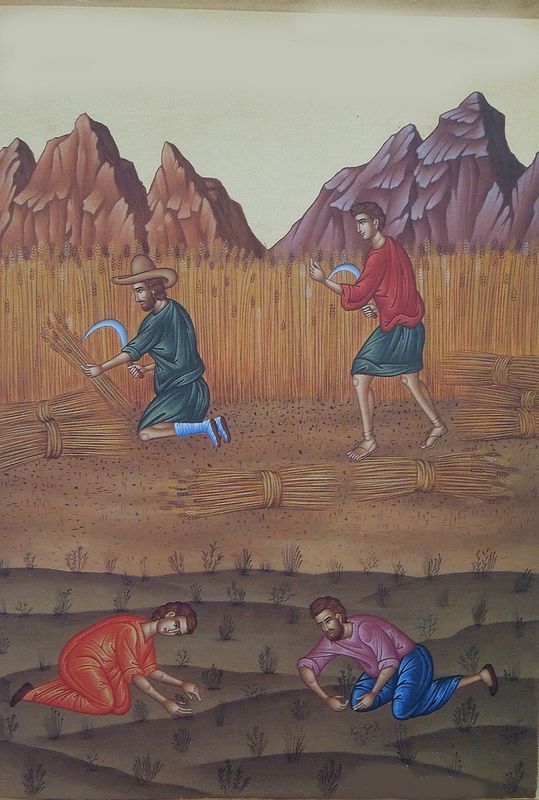
An icon of the Parable of the Wheat and the Weeds


Let’s go ahead and acknowledge that this is a tough parable to hear because it reeks of judgment. There’s a dualism here: you’re either wheat or weeds, and if you’re weeds then you’re going to be gathered up and burned in the place with weeping and gnashing of teeth. I want to apologize to anyone who had a preacher tell them that this dread, this fear of being a weed and getting thrown into the fire, was what should motivate their Christian lives.  That’s just not what Jesus is doing.


Yes, there is judgment here, but the judgment is a reflection of what was happening in the early church at the time, namely Matthew’s gospel community. Matthew is all about the eschaton, he loves him some apocalyptic imagery, and because this community was very mixed – with both Jews and Gentiles and with those who genuinely believed the Gospel liberation message and lived it out and those who only gave it lip service – there was a tendency for folks to separate themselves, go into their own silos, if you will. The writer of the Gospel didn’t like this and has Jesus offer this prophecy, that when the kingdom comes on earth in its fulfillment at the end of the age, those pseudo-disciples will get their comeuppance. Anytime you read these kinds of judgmental Gospel passages think about what was happening in those communities, and you can understand that isn’t so much Jesus who is passing judgment but the Gospel communities themselves.


But that doesn’t stop a lot of Christians from just passing judgment left and right. You’re a weed, you’re a weed, you’re cool, and you’re a weed! When all you have is a machete, everything looks like a weed. This parable gives us a Gospel truth that we all need to hear: it ain’t our job to get rid of the weeds!


There’s a few surprises in this parable. For starters, the master in the parable is the one who sows, even though the servants would’ve normally done that work. Also, the master knows that it was an enemy who sowed these weeds, which were likely darnel, which is a noxious weed that closely resembles wheat and is native to Palestine. You can’t tell the difference between them until maturity. But maybe most surprising of all is that when the servants are so eager to take their machetes to the darnel, the master says no, they may damage the wheat, and he has them allow the wheat and darnel to grow together until the harvest time. 


There’s no silos in this story. There’s no separation. There’s nothing anyone has to do except let nature takes its course and for the seeds to blossom into whatever they will be and to wait for the master to take care of the rest. That’s what grace is, y’all. It’s the freedom that God gives us to not have to do God’s job. Besides, when we try doing God’s job it usually ends up coming out poorly. 


My parish here in North Carolina is preparing for my imminent departure next week. If you are among those folks, you might feel, especially in the coming weeks and months, like you need to take out your machetes and start weeding, or at least pruning. You might think the clergy who will walk with you are just the best examples of the ripest wheat and you might think they’re the weediest weeds that ever weed. You may have already decided that some folks that the outgoing priest treated like wheat were really more like darnel than real wheat and you and your machete are gonna make sure they don’t contaminate this field. But that’s not anyone’s call to make because it’s not your field, it’s not the priest’s, it’s God’s. The master in the parable owns the field! He knows what’s growing in it, even when nobody else does. So if that’s the case, then there’s no need for the machetes. There’s no need for the weeding and the pruning and the judgment. Not in this little c church, not the big C Church, not in the whole field out there in which our master, our God, has planted every single one of us. And yes, some are good, some are bad, and most are a mixture of both, but passing judgment on who is which is reserved only for God and only at the end of the age. Those of us who spend our time fretting over that day or acting on God’s behalf to pass the judgment beforehand on others often miss the flowers and blackberry bushes and beautiful creation all around us as we’re chopping away. 


No time for folks running to their own silos. No time for judgment. No time for machetes. Now is the time to grow together. Now is the time to take root where God has planted you and to listen for whom the Spirit is calling to take up residence in this particular section of God’s ginormous field for the purpose of loving the wheat, weeds, and everything in-between. 


Monday, July 17, 2023

Caring for the Soil

 'Jesus went out of the house and sat beside the sea. Such great crowds gathered around him that he got into a boat and sat there, while the whole crowd stood on the beach. And he told them many things in parables, saying: “Listen! A sower went out to sow. And as he sowed, some seeds fell on the path, and the birds came and ate them up. Other seeds fell on rocky ground, where they did not have much soil, and they sprang up quickly, since they had no depth of soil. But when the sun rose, they were scorched; and since they had no root, they withered away. Other seeds fell among thorns, and the thorns grew up and choked them. Other seeds fell on good soil and brought forth grain, some a hundredfold, some sixty, some thirty. Let anyone with ears listen!”

“Hear then the parable of the sower. When anyone hears the word of the kingdom and does not understand it, the evil one comes and snatches away what is sown in the heart; this is what was sown on the path. As for what was sown on rocky ground, this is the one who hears the word and immediately receives it with joy; yet such a person has no root, but endures only for a while, and when trouble or persecution arises on account of the word, that person immediately falls away. As for what was sown among thorns, this is the one who hears the word, but the cares of the world and the lure of wealth choke the word, and it yields nothing. But as for what was sown on good soil, this is the one who hears the word and understands it, who indeed bears fruit and yields, in one case a hundredfold, in another sixty, and in another thirty.”'

Matthew 13: 1-9, 18-23


Does anyone know what the opposite of a green thumb is? Because that’s what I have! I did do a little research and found that the opposite of green on the color wheel is magenta, so maybe I should say I have a magenta thumb. The point is I’m bad at sowing and farming and reaping and all that other stuff. My wife Kristen and I have joked that when the zombie apocalypse comes she’s going to have to use her bow and arrow to kill for our food because I’m sure not gonna be able to grow it!


For what it’s worth, I have given it a try. My dad used to keep a garden with his bike-riding buddy in the summertime, and he’d have me till it, dig up taters, throw down seeds, and the like. When I moved in to the house where I've lived for the past eight years, I tried planting some things in a raised bed along the side of the house. Kristen and I had just started dating, and she was excited to get her hands dirty and for us to be able to eat veggies from our own garden, and you know what, it worked! At first. There was corn and okra and green beans and tomatoes. And then, there wasn’t. The soil had no depth and wasn’t very good. Too much of that Carolina clay. So nearly everything died about as quickly as it sprang up. We did get a few green beans and a couple of maters before the end, though. In the years since we’ve tried but have never been able to get that side bed to grow anything – except some wildflowers that finally came in this year. I suspect the intercessions of my wildflower-picking mother had something to with that. It’s a good thing I’m a priest because I don’t think I could cut it in the farming business.


Ah, but you know who IS in the farming business? God. Corny as that might sound – see what I did there? – God’s always been about planting and sowing and reaping and feeding. That’s just who God is. 


Jesus understood this about the one whom he called Abba. This week's section of the Gospel of Matthew kicks off a series of parables from Jesus, those similes and metaphors uses to describe something about the nature of God and what he called the Kingdom of Heaven, which is nothing less than the reality of God’s compassion and mercy most fully present, even to the most closed-off human mind, even now. This first parable is often called the Parable of the Sower, though I think Farmer would do just as well. A farmer goes out to plant some seed, and all manner of results occur. The seeds go everywhere. Some get plucked up by animals, some get scorched, some flourish a hundredfold, some sixty, some thirty. 


Did you catch that there is a whole section of our reading today that’s missing? Can you guess what happens in that section? The apostles ask Jesus why he speaks to the crowds in parables. He says it’s because the apostles have been given the secrets of the Kingdom, but regular folk haven’t, so he has to speak in parables to them, but of course, the apostles don’t get it, either, and Jesus has to explain the parable to them – this is the first of only two times in the Gospel that Jesus takes the time to explain his teaching. The seed is the word – lowercase ‘w’ in our text, but we could just as easily capitalize it. The message Jesus brings about the compassion and mercy of God. The people hearing this word are the soil, which sometimes is rocky, sometimes full of clay, sometimes healthy and hearty. Whatever becomes of those seeds depends on that soil and how much care goes into it. 


The Parable of the Sower by Rebecca Brogan of jtbarts.com 


The seeds God has thrown down upon this earth are numerous: seeds of new ideas and refreshed traditions, seeds of hope and forgiveness, common seeds and rare seeds, seeds of longing and contentment, of controversy and of change. Seeds scattered everywhere, within each of us. Which will take root and grow? Will the soil, will we, receive them? Will we do our part to care for them?


Each of us has a part to play in God’s seed-sowing, crop-growing business. Sometimes we are given a bag of seeds and sent out, like the apostles, to throw them down wherever we go – into our work places, into our homes, our churches – whether the soil is dried up or fertile. Other times we are handed a hoe and a spade, and maybe some New Skin for the inevitable blisters, and told to get to work breaking through that hard ground, digging those trenches, preparing the soil for seeds that we will never touch but that others one day will bring. 


Whether we are called to prepare or to plant, to work, or to study, or to pray, we can help nurture the kind of soil that will be a good home for the seeds that are the compassion and mercy of God made known to us in the life, death, and resurrection of Jesus Christ. We can devote ourselves to dreaming deep and breaking open and making space within ourselves and our communities for the sprouting of the Good News that Jesus offers, that the Kingdom is closer than we can possibly imagine. We can each play a part even if we never see the results. 


And that, brothers and sisters, is what the Church – big ‘C’ and little ‘c’ alike – is really all about. My dad used to tell the high school basketball teams that he coached that unless you won a state championship, the last game you ever play is going to be a loss. And for us, unless we’re around at the Day of Resurrection, when Jesus does come again in glory to judge the quick and the dead, well then, we’re not likely to see the end results of whatever seeds we’ve planted in the soil that is our own contexts – be it in our current church community, current city, or wherever. Ministers come and go. Kids graduate. Longtime pillars of the community go on to glory. But the church remains. The ekklesia. The people of God. The soil. And the soil will always need tilling, watering, and all manner of care. 


Sometimes that old garden my dad and his buddy kept up yielded some really good corn and taters. Sometimes not so much. Sometimes when we offer a program or a worship service, it doesn’t yield the harvest we hoped. It’s easy to get discouraged. But God is still the one providing the rain and sunshine, even if we are the ones with the hoe and spade. When discussing this text in our Bible Study this week, one person noted that the yielded up hundred, sixty, and thirty fold seemed huge, and that they were lucky to even get five - they later came back and said that five was too much and that they were lucky to get one! That’s kind of the point of the parable. The amount isn’t what’s important because God is still moving in the hearts of those who receive those seeds, even if it doesn’t seem like much has been done. All you have to do is be faithful and trust. In the case of the Good Shepherd in Asheboro, the parish I've served for the past eight years and to whom I will be saying goodbye at the end of this month, even if the reputation they've garnered is that they're the church that offers an ice cream social to neighborhood kids in the summertime, or that they're the one church where literally all people are welcome, well, they've yielded a good harvest. 


We all have been given seeds for planting, even those of us with magenta thumbs. But those like us have still been given a spade and a hoe. So what do ya say? For the sake of the ones who’ll come after and reap the harvest, let’s get to work, wherever the seeds get thrown. 


Monday, June 26, 2023

Good News According to a Tuesday Bible Study

'Jesus said to the twelve disciples, “A disciple is not above the teacher, nor a slave above the master; it is enough for the disciple to be like the teacher, and the slave like the master. If they have called the master of the house Beelzebul, how much more will they malign those of his household!

“So have no fear of them; for nothing is covered up that will not be uncovered, and nothing secret that will not become known. What I say to you in the dark, tell in the light; and what you hear whispered, proclaim from the housetops. Do not fear those who kill the body but cannot kill the soul; rather fear him who can destroy both soul and body in hell. Are not two sparrows sold for a penny? Yet not one of them will fall to the ground apart from your Father. And even the hairs of your head are all counted. So do not be afraid; you are of more value than many sparrows.

“Everyone therefore who acknowledges me before others, I also will acknowledge before my Father in heaven; but whoever denies me before others, I also will deny before my Father in heaven.

“Do not think that I have come to bring peace to the earth; I have not come to bring peace, but a sword.

For I have come to set a man against his father, 

and a daughter against her mother, 

and a daughter-in-law against her mother-in-law; 

and one’s foes will be members of one’s own household.

Whoever loves father or mother more than me is not worthy of me; and whoever loves son or daughter more than me is not worthy of me; and whoever does not take up the cross and follow me is not worthy of me. Those who find their life will lose it, and those who lose their life for my sake will find it.”'

--Matthew 10: 24-39


A damaged mosaic of Jesus sending out the Twelve.


During Lent we began having a Bible Study on Tuesday mornings in my parish. We intended for it to simply be a practice for the Lenten season, but it’s been popular enough that we’ve kept it going. It is based off of the ancient study model of Lectio Divina, developed by Saint Benedict of Nursia. Here's how it works: we take the Gospel for the upcoming Sunday and ask three questions: 1) What is the text saying in its own context when it was written? 2) What is it saying to you personally as an individual? and 3) What is it saying to the wider Church and the world? We’ve had some really great conversations, and it’s especially edifying for this preacher because the Holy Spirit is clearly moving in the insights and questions of the group. 


It's all well and good until we get a Gospel like this one, and boy howdy, we had a tough time with this section from Matthew, chapter 10. I recall hearing, among other things on Tuesday: “I just don’t understand!” and “That makes no sense!” and “What do you mean he didn’t come to bring peace?!” To be sure, this is not an easy passage to makes sense out of, especially for a modern audience. But, as one of our Bible Study regulars noted, there’s something meaningful about seeing a text that is so hard at face value but still being able to find some measure of Good News. So, as I did in my sermon this past Sunday, I've structured this blog post in the fashion of our Bible Study.


Question 1: What is the text saying to the people of its own time? In the story? In the community?

The first thing we ask anytime we come across a text that seems difficult to grasp at first is: what is the context?  What’s going on in this passage and in the community that produced it?  Jesus isn’t giving a sermon to a large group of people here, rather he is continuing his instructions to the 12 apostles as he sends them out, picking up where last week’s reading left off.  He is, effectively, laying it all out there for them, giving them, as one member of the Bible Study group said, a waiver to sign that says they understand what they’re getting into. If they’re going to commit to this work – the work of casting out demons, healing sick, raising the dead, and proclaiming the Good News that the Kingdom of Heaven has come near – then they need to be prepared for in-fighting amongst family members, and for some pretty powerful people threatening them, silencing them, even physically harming them. What’s more, they will need to be ready to take up their cross – that shameful form of public execution reserved for those who spoke out against the Roman government. It will not be for the faint of heart.   


Now that we know what’s happening with the passage we can ask:  what’s going on with the community that produced it?  Matthew’s Gospel was composed around the year 85 AD, 15 years after the destruction of the Jewish Temple. There is a theme that undercuts all of Matthew and it is the eschaton, the end of the world as we know it – and we feel fine! Matthew is often called the most Jewish Gospel because Jesus not only emulates Moses in the Sermon on the Mount, but he also echoes the prophets of old. He warns the people, as the prophets did, of God’s coming day of judgment, and in this text even warns his disciples that while they needn’t fear human authorities, the only one they need fear – to show awe, reverence, and respect for – is God, who alone is capable of casting one’s soul into the hellfire of Gehenna, the dung heap outside of Jerusalem where the bodies of the crucified were dumped – Gehenna is the Greek word that our English Bibles translates to hell. For the community that produced this Gospel, Jesus is carrying on that same voice of the prophets, calling the people to repentance because, as far as they were concerned, that time of judgement was close at hand, and the destruction of the Temple had been the first sign.  


Question 2: What is the text saying to me personally (using "I" statements)?

OK, preacher, you might be saying, all that context stuff is fine, but let’s get down to brass tacks. If I am not part of the community of Matthew’s Gospel or living in first century Palestine, then how can I find myself in this text? As was brought up in our Bible Study last week, it’s important to realize that, unless we have actually faced real persecution and still dared to live our authentic lives – the lives to which Jesus calls everyone – we can’t really begin to understand what the apostles were facing. Lots of modern Christians try – projecting some of their experiences of course correction or others calling out their harmful rhetoric as somehow being the same thing as the persecutions faced by the apostles, but that’s a false equivalency. Modern Christianity is not under attack!


Still, as I see it, there are those among us – faithful and loving folks – who do face real threats of violence and emotional harm on a daily basis. We are in the final days of Pride Month, and though I speak from the place of privilege as a white, cisgender man who identifies as heterosexual, I am compelled to raise up the witness of our queer siblings, who dare each day to live as God made them, to be who Jesus calls them to be and lives the lives Jesus calls them to live, just as the apostles were so called. People I love dearly – whom Jesus loves dearly - have been spit upon, beaten, and told they are an abomination in the eyes of God, and yet they still stand. They’ve had to forsake father and mother when father and mother have forsaken them, and still they love, and dance, and march. This is the closest thing, I believe, that modern American Christianity has to a witness of faith and courage that rivals that of the apostles. 


Question 3: What is the text saying to the Church and to the modern world?

Which brings me to the overall theme that was conveyed in our Bible Study and the answer to the third and final question of what Good News is there for the wider Church and world. It lies in Jesus’ own words in verse 26 ("have no fear"),  and in verse 31 ("do not be afraid"). Even when it looks like the world is ending, have no fear. Even when those in power try to cut you down, do not be afraid. Jesus may not have brought the sword himself, but his coming into the world did. His very presence invited conflict – they did kill him, remember?! – so why wouldn’t the message of those whom he has sent into the world not invite that conflict, as well? 

And, like any good prophet, Jesus was right. The blood of Abel cries out again and again whenever those whom Jesus loves and calls his own are cut down, or when they do the cutting down. Families may be splintered, churches may break away from each other, but God is still good…all the time. Finding one’s life has to do with security – in Jesus’ time it was the security that came with a stable family life, and in our times it often has to do with jobs, money, or housing. Yet when we are willing to let go of that need for security, which is precisely what the apostles did, then we find our real lives, our real purpose, and we understand that no matter what portents and problems and perils may come, we are called beloved by Christ Jesus, and that is all that matters. It is in him, and him alone, that we find our true security, our true lives.


Final Thoughts

Our Bible Study last week went nearly 30 minutes overtime because, as I said to the group, we could unpack this reading all day long, and I’m sure this blog post could've been a lot longer. I mean it when I say that if any of you struggle with this passage, or even anything I have had to say about it, come at me with your questions and insights. I love it! 

And for now, may you receive the wisdom of our Tuesday Bible Study group and know for yourselves that while your context may not be the same as the apostles or the community of Matthew’s Gospel, you too are called to go out into a frightening world and proclaim the Good News of God’s love and mercy known to us in the life, death, and resurrection of Jesus Christ. How you do that is up to each of you, but if you trust in Jesus, then you will have nothing to fear.


If you would like to join the Tuesday Bible Study at the Episcopal Church of the Good Shepherd, stop by at 9:00 or join us via Zoom by clicking here. 


Sunday, June 18, 2023

Rise of the Beasts: The More Things Change...

WARNING: This post is LONG and contains massive SPOILERS for Transformers: Rise of the Beasts!


Is it Transformers 7, or Bumblebee 2: Electric Boogaloo?!


Beast Wars 

In the beginning came the beasts and all that creeps, crawls, and flies. But nature lies...they're robots in disguise!!

With those words, the Beast Wars began in 1996. In order to fully understand the importance of the most recent live action movie, Rise of the Beasts, one first has to understand how important Beast Wars was, and still is, to the Transformers franchise as a whole.

Simply put, Beast Wars saved Transformers. Like most 22-minute toy commercials from the 1980s, Transformers was on its last legs when the new decade dawned.  A failed reboot - Generation 2 - looked like the end, and Transformers was about to go the way of Spiral Zone, Jayce & the Wheeled Warriors, and Silverhawks. But Hasbro gambled in 1996 on a new concept: transforming robots, yes, but now they would be animals. The idea was handed over to Kenner, a newly acquired Hasbro subsidiary, who took the toyline in directions it had never seen before, introducing ball-and-socket joints, greater articulation, and the ability to store weapons in alternate modes. Meanwhile, the accompanying animated series, which fans initially rejected for its crude 90s CGI and apparent disconnect from the original cartoon, soon won us all over with its story of the heroic Maximals and evil Predacons, descendants of the Autobots and Decepticons, who used Transwarp technology to travel back to prehistoric Earth, engaging in a fight for their own future. Memorable characters like Dinobot and Waspinator, and the insistence by the writing team that this was a science fiction show, not a toy commercial, insured that Beast Wars would hold a beloved place in the hearts of fans. Because of its success, there has never been a year since its initial launch in which there weren't Transformers toys on store shelves and a cartoon on tv. It's that important. 


The original logo for Beast Wars, which ran from 1996-1999.


With that in mind, one can understand how excited most fans were to hear that the seventh live action Transformers movie would feature characters from Beast Wars. The live action series of films were initially directed by Michael Bay, and for a decade were, for good or ill, what people pictured in their minds when they heard the word Transformers. They had huge action set pieces, amazing visual effects, and a terrific series of film scores by Steve Jablonsky. They were also filled with sophomoric humor only a teenage boy could appreciate, as well as rampant misogyny, and stories that made no sense and often contradicted both the source material and earlier films within the series. The formula grew stale, and after the failure of 2017's The Last Knight, Michael Bay announced he was done as director.

The 2018 solo Bumblebee movie, directed by Travis Knight, appeared to usher in a new era for the live action films. Everything from the robot designs to the camera work were modified for the better with the new film, not to mention an end to, well, everything that Michael Bay includes in all of his films. Bumblebee had heart and humor, the qualities that fans loved about the original cartoon, as well as Beast Wars. It was a character-driven story, much like Beast Wars, not dependent upon Macguffins and character motivations that were little more than "we need to do this because the plot dictates we have to." Could this new film, which was marketed as a sequel to Bumblebee, live up that standard?


Bumblebee and Charlie in the 2018 Bumblebee movie.


Like most things related to Transformers, opinions on Rise of the Beasts have been mixed. Critics are pretty meh, as they usually are with movies in this genre. The general public, more or less, loves it, while longtime fans are quick to point out its shortcomings. As usual, my opinion is also mixed, and is just that, my opinion. I welcome other thoughts and feelings that you may have had, but for now, come join Father Prime as I attempt to review Transformers: Rise of the Beasts!


The Plot

Rise of the Beasts both is and isn't a Beast Wars movie. Yes, the Maximals are here, specifically Optimus Primal, Cheetor, Rhinox, Airazor, and Apelinq. Instead of battling the Predacons, their main foes are the Terrorcons, a name borrowed from a Decepticon combiner team from Generation One but is here assigned to the Heralds of Unicron. Yes, THIS Unicron:


Unicron about to consume planet Lithone in the opening minutes of The Transformers: The Movie (1986).


The same Unicron that made his debut in the 1986 animated movie, voiced by Orson Welles in his last performance, was revealed in the second trailer for Rise of the Beasts to be this movie's new big bad.


Unicron about to consume the planet Eukaris in the opening minutes of Rise of the Beasts (2023).


While it is never explicitly stated that the Maximals are the descendants of the Autobots, hints are dropped that they hail from the future, just like in Beast Wars. For this movie, however, the writers took a page, literally, from IDW Publishing, with the Maximals inhabiting a planet that, while nameless in the movie, is known as Eukaris in those comic stories. This was a great touch.

When Unicron shows up to destroy Eukaris, he sends his Herald Scourge ahead of him. Scourge, named after an original Herald of Unicron from the animated movie, is voiced by Peter Dinklage. There is a sinister quality to Scourge that hints at something deeper, some kind of life that he had before Unicron captured and enslaved him. Scourge is sent to subdue the Maximals and obtain their greatest artifact - and this movie's Macguffin - the Transwarp Key. 


Scourge, Herald of Unicron.

While it's nice to see Transwarp technology, which had been introduced into the franchise with Beast Wars, the use of a Macguffin was something the Bumblebee film moved away from after all five previous films relied on them as the central plot device. Nevertheless, at least it's a Macguffin that feels familiar to fans of Beast Wars, so I suppose it gets a pass.

Maximal leader Apelinq sacrifices himself at the hands of Scourge in order to allow Optimus Primal and the rest of the Maximals to escape using the Transwarp Key. They arrive on Earth, although exactly WHEN they arrive is never made clear. 

Fast forward (I guess) to 1994, seven years after the events of Bumblebee. Optimus Prime had arrived at the end of that film and now he and Bumblebee have been joined by Mirage, Arcee, Wheeljack, and Stratosphere - more Autobots may possibly have been a part of this team, but they are never mentioned. When a human manages to activate one half of the Transwarp Key, which had been separated and hidden in Peru before being discovered by archeologists, it sends a beacon which, for some reason, is only visible to Cybertronians. Prime and his Autobots see it shoot into the sky, but it also draws the attention of Scourge and the Terrorcons, who arrive on Earth to retrieve the Key and summon their master. 


Optimus Prime and Bumblebee as they appeared at the end of the Bumblebee movie.


Optimus mentions that the Key could finally give them a way to return home to Cybertron. The audience isn't told how the Autobots came to Earth in the first place, but we can presume they all arrived in a similar fashion that Bumblebee did in the last film, in an escape pod launched from Cybertron. The Autobots and Terrorcons converge on the museum housing the Key, and a battle ensues, with Scourge overwhelming Prime, killing Bumblebee (more on that later), and making off with half of the Key. 

Suddenly, the Maximal Airazor arrives to drive Scourge away. She explains the nature of the Maximals, that they are "from both your past and your future," which is...a thing. She also details who the Terrorcons are, that they serve Unicron, and that the dark god intends to use the Key to travel through time and space until all worlds, all realities are consumed. Though Scourge believes he has achieved his victory, Airazor further explains that the Key had been split (a fact about which Scourge - as well as the audience - was unaware), which prompts the team of Autobots, humans, and Airazor to travel to Peru to retrieve the second half and keep the Key out of Scourge's hands. The Macguffin hunt is on.


Airazor as she appears in a promotional poster for Rise of the Beasts.

It should be noted here that the human character Elena is the one to discover both the first half of the Key and the location of the second half. She is a young Black woman who dreams of being an archeologist. More on her, and the other human lead, Noah, in a little bit.

Of course, the Terrorcons attack when the good guys make it to Peru, and it is here that the first red flag in this film was set off for me. During the battle, Optimus Prime confronts Scourge and tells the Autobots, "I'm going to take the Key from Scourge, and then I'm going to take his head!" 

Immediately, my mind went to the portrayals of Prime in the Bay films and the sheer brutality with which he was depicted, garnering him the dubious moniker of Murder Prime from some fans. He didn't just beat the Decepticons, but he savagely tore them apart with melee weapons, even when they were unarmed. 

Here's a rundown of Prime's "heroic" actions from each film, in case you missed them:

Transformers - Is willing to sacrifice his own troops to achieve the mission; decapitates Bonecrusher after disarming him.

Revenge of the Fallen - Executes a defenseless Demolisher; rips Grinder's face apart with hooks; tells The Fallen to "Give me your face!" before ripping it off and smashing his hand through his fleeing opponent's chest,  crushing The Fallen's spark in his bare hand.

Dark of the Moon - Executes a defenseless Sentinel Prime; tells Shockwave "You die now!" before tearing his eye from his head; decapitates Megatron with an axe; gives the memorable line, "We will kill them all!"

Age of Extinction - Actually kills a human; has memorable lines like, "He is going to die!", "I'm going to tear them apart!" , "I'll kill you!" , and "You defend my family or die!" (said to Grimlock and the Dinobots) 

The Last Knight - Turns evil (becoming Nemesis Prime); uses his sword to viciously slice through enemies in the final battle while reminding them what is name is.

Optimus during his heel turn as Nemesis Prime in The Last Knight (2017).


There's more, but you get the idea. For being such a hero, Optimus Prime was depicted as a bloodthirsty, rage-filled angel of death that is totally cut off from the emotions of others. In wrestling terms, he is supposed to be the babyface (the good guy), but his words and actions felt more like a heel (the bad guy) in those movies. When that happens in any story, you know you're in trouble.

What's more, it was so hard in those five films to hear Peter Cullen, the voice of Optimus Prime going all the way back to 1984, say those kinds of lines. Peter himself made public comments about how uncomfortable he was and how he tried to get Michael Bay to understand that that just isn't how Optimus Prime would act, but Bay gonna Bay and Peter said the lines anyway. 

To turn the clock back briefly: Peter Cullen has often told the story that he based Optimus Prime off his older brother Larry, who was a Marine during the Vietnam War. When Peter got the gig as Prime, he told his brother that he was going to be voicing a truck who happened to be a military leader.  Larry told him: "If you're going to be a leader, Peter, you have to be strong enough to be gentle." That shines through in Peter's performances in the original cartoon and animated movie, but because Michael Bay knows nothing of real human dialogue and emotion besides the horniness and rage of a teenage boy, the Prime of the live action films lacked the nobility and gentleness of the character to whom Peter Cullen had first given voice.


Peter Cullen with an Optimus Prime Voice-Changing Helmet in 2007.


Even though he made a brief appearance in Bumblebee, Prime was truly returning to the spotlight with Rise of the Beasts, and my deepest hope for the film was that it would continue the positive trends begun by Bumblebee and move further away from the tone and style of the first five films. But in this halfway-point fight with Scourge, I felt like my hope was being dashed. There are dozens of ways Prime could've given voice to his desire to beat Scourge: for example, "I'm going to take him DOWN!" rather than "I'm going to take HIS HEAD!" Most folks in the theatre probably didn't notice, but I was put back on my heels, worried that the character that was one of my earliest heroes, one who always found a different way to deal with his enemies than brutally annihilating them, was slinking back into a version that I had hoped had been put to rest when Michael Bay left the director's chair. They're not really gonna do this, are they?

Following the battle with the Terrorcons, in which Airazor is hit with a mysterious object by Scourge that seems to infect her with some Unicron-like virus thats slowly turns her evil, we finally meet back up with the rest of the Maximals in the Peruvian jungle. At last, the Autobots and Maximals are on screen together, including both Optimuses...Optimi....leaders!


The Autobots meet the Maximals in Peru.


It is here that we meet, in earnest, Optimus Primal, voiced by Ron Perlman. His performance is one of the highlights of the whole film. Geek culture movie fans know him best from Hellboy, Pacific Rim, and the original Teen Titans. His casting choice may have surprised some, but he had actually portrayed Primal once before, in the third part of Machinima's Prime Wars Trilogy web-series, Power of the Primes. The less said about that trilogy the better! 

But Perlman was great, bringing a kind of wisdom, kindness, and perspective to the role of Optimus Primal. It's clear that new director Steven Caple, Jr. was playing Primal off as the one who would show Prime how to embody the kind of gentle strength that is needed in a real leader. Optimus Prime is shown in this film to be beleaguered and war-worn, broken by the weight of loss and the responsibility he feels for stranding his Autobots on this alien world while Cybertron remains unprotected from the Decepticons. It made sense that the film was painting Optimus Primal, a time-traveling descendant named after him, as the one to show Optimus Prime what it means to be a true leader, the kind that will become legendary in the history of the Cybertronian race. At one point Primal takes Prime to a small human village, showing the Autobots how the Maximals and humans have lived together for centuries, as the bots protect the humans while they safeguard the second half of the Transwarp Key. This role of protector for innocent lifeforms is what Prime is meant to take on, and it's from the monkey that the truck learns this lesson.


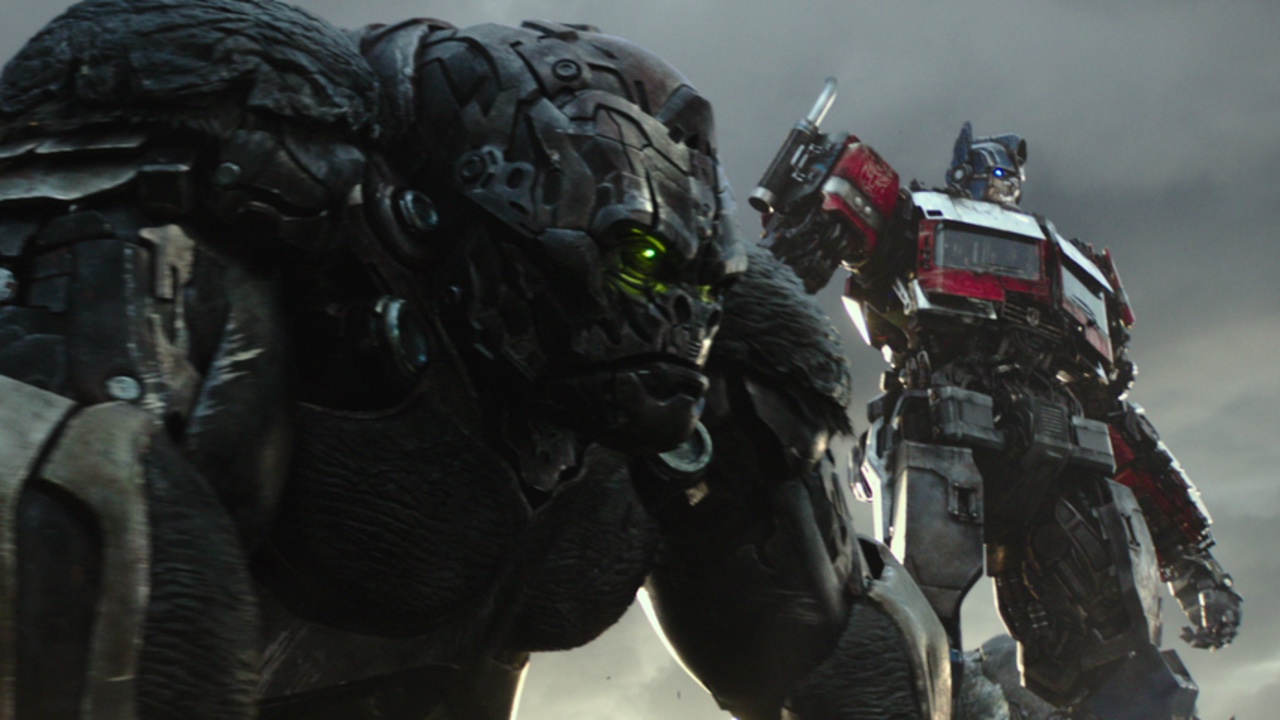
Primal and Prime.


Prime begins the movie with an unreasonable mistrust of humans, despite their aid to Bumblebee in the previous film and Prime's commendation of his scout's duty defending them against the Decepticons. After talking with Primal, Prime does come to trust his human allies, especially when he realizes that Noah would destroy the Key if it meant keeping Earth safe from Unicron. Prime sees in Noah a reflection of himself, someone who just wants to protect the ones he loves. The audience is meant to pick up on this parallel between two soldiers - Noah, it's said earlier, was in the army but was discharged for unknown reasons. They both only want to save their families: Noah tries to take care of his single mother and his ailing younger brother, while Prime is trying to get his troops home. This is great! It finally looks like we have a Transformers movie with an actual character arc for one its bots! Maybe he won't turn out to be Murder Prime, after all!

After Scourge secures the second half of the Key and Optimus Primal is forced to kill Airazor when her infection causes her to attack her friends (in one of the most emotional scenes of the whole film), the stage is set for the final battle: the Autobots and Maximals fighting together against the Terrorcons as Scourge opens a Transwarp portal to bring Unicron to Earth. The film's climax goes as expected, with lots of CGI and nameless/faceless Terrorcon drones for the good guys to mow down, and of course the inevitable dramatic return of Bumblebee from the dead (although, if you saw literally ANY of the film's trailers, you already knew that was going to happen).


Seriously, nobody was surprised by this, no matter how badass it was meant to be.


There are some fun moments in the battle, especially when Optimus Primal calls for Rhinox and Cheetor to "Maximize!" which was the command code used in Beast Wars for whenever the Maximals transformed from beast mode to robot mode. It was one of those 'stand up and cheer' moments. Meanwhile, the human allies are tasked with shutting down the portal while the Optimi....Optimuses....Prime and Primal make their way through the Terrorcon hordes to get to Scourge. 

It is in the final confrontation between Optimus Prime and Scourge that the film finally plays its hand. Has Prime moved past his rage? Has he changed at all?  As I sat there, I thought of several ways that this could go , which would, in some ways, redeem the Bayverse Prime and debunk the myth of redemptive violence that was so prevalent in those earlier films (and summer blockbusters, in general):
  • Prime could destroy the device that harnesses the Key's power to create a Transwarp portal, which would cause the approaching Unicron (in planet mode) to collapse in on himself, keeping him forever from returning to this universe.
  • Prime could make the ultimate sacrifice and go straight for destroying the Key itself, leaving Unicron defeated but ensuring that the Autobots and Maximals cannot return to Cybertron; perhaps he'd even give the line, "No sacrifice, no victory!" as a callback to the first live action film.
  • Prime could destroy the device and/or the Key, which could then emancipate Scourge from Unicron's servitude, at last granting him freedom and a sense of peace; we never get any information on who Scourge was before becoming a Herald, after all.
  • Prime could pull some fun, 1980s cartoon shenanigans and simply humiliate Scourge the same way he did Megatron, leaving the bad guy leader to shout "Retreat!" and vow to fight another day.
No. None of these scenarios happen.

Instead, Prime does what he did in all five Bay films. Despite the fact that Scourge bested him earlier in the film - twice! - Prime attacks him with such ferocity, as to cut off both of Scourge's arms, and in that moment when his opponent is defenseless, shouts, "Now you will see the real power of the Primes!!" and promptly rips off Scourge's head with his energon blade, complete with Scourge's spine attached. Prime went full-on Sub-Zero on Scourge, and.I actually let out an audible "No!" despite the theatre erupting in cheers.


The Maximals and Autobots wage their battle to destroy the evil forces of the Terrorcons.


They really did it. Despite what Steven Caple, Jr. had said about this film being a reboot, that it was a fresh direction and had no connection to the Bay films, the studio ultimately won out when it came to the portrayal of Optimus "Give me your face!" Prime. The aggressive military leader that had been willing to sacrifice his own troops and would brutally slaughter defenseless enemies, was still there. Sure, one might say, it wasn't as bad as those previous portrayals; after all, Scourge had it coming and Prime had no choice after having lost so much. 

But this misses the point of who Prime is supposed to be, who he always was before Paramount got hold of him. He's the guy that's supposed to find another way. He's supposed to learn from his mistakes - as he says in the original cartoon, "Sometimes even the wisest of men and machines can be in error." (from the episode SOS Dinobots). 

Here, however, there was no growth beyond that anger, that pain. He just beat the bad guy. That's it. Even when Unicron entices Prime to be his new Herald, saying, "I can give you everything you want," Prime responds by saying, "Then die!" as he smashes the Key. This is who Optimus Prime is in the live action films, and because he was the reason I got into Transformers in the first place, I am heartbroken that the studio couldn't move on from this, despite everything else that was so good about Rise of the Beasts.

As if Murder Prime wasn't enough of a clue that this is the same continuity as the Bay films, Unicron isn't destroyed. Instead, Primal explains that the dark god is trapped, leaving open the very real possibility that he could return. Seeing that this film is set in 1994 and that the producers had stated repeatedly that this was a prequel to the Bay films, one can reasonably assume that Unicron will remain trapped until the events of The Last Knight (the final Bay-directed film), where it will be revealed that Unicron is at the core of planet Earth itself. Sunrise, sunset. Once again, they couldn't bring themselves to separate from the Bay films, despite The Last Knight ending on a cliffhanger that will never be resolved.

So the Autobots fly...somewhere...aboard Stratosphere, while Optimus Primal gives a mighty roar from a cliffside. Elena gets to become a real archeologist, and Noah gets a job offer with G.I. Joe. That's it. Pick up your trash and exit the theatre in an orderly fashion. Thanks for coming.

Initial Impressions

The portrayal of Prime and the apparent connection to the Bay films made it impossible for me to love this movie, despite how much I wanted to. Instead, I came away merely liking it. For some, including my wife, the film was a breath of fresh air and a huge hit. I don't disagree with that; in fact, I think that the film was entertaining and poignant in ways that the Bay films never were nor could've been. Though, if I'm honest, that's not a very high bar to clear.


Steven Caple, Jr., director of Rise of the Beasts.


Steven Caple, Jr. presents a Transformers film that is deeply and intentionally Black, which is a very good thing. It is steeped in the experience of Black and brown people, and I loved that! Before it even premiered we noticed this in the music in the trailers and the soundtrack that dropped on Spotify, filled with 90s hip-hop and appropriately entitled Rise of the Beats

The main human protagonist in this film is Noah, who comes from a working class Latino family. It is he who serves as the character that bridges the human and Transformer stories - the way Charlie did in Bumblebee and Sam and Marky Mark did in the Bay films. He is committed to taking care of his family - his "home team" as he calls them. He struggles to get regular work because his brother's illness requires him often to drop everything for his sake, resulting in Noah not being able to land a security job at the beginning of the film. When he goes for the interview, he's told that "people like you" don't have a place in the company. This hits hard. The would-be boss tells him it's because he's not a "team player" but we cannot separate Noah's racial identity from this moment, nor should we. Like many young men in similar situations, he resorts to crime to earn the money to pay his brothers' hospital bills, which again, is a story that certainly resonates with communities of color.

Furthermore, Elena is a wonderful addition to the human cast in this franchise. Her own experience is a commentary on colonialism - working for a prissy, white boss in a museum that houses artifacts gathered by white folks from indigenous cultures. Elena longs for the day when she can be the one "there when the discovery is made" and gets to live this out when she and Noah are charged by the Autobots with retrieving the second half of the Transwarp Key in a buried Incan temple that Elena had discovered earlier in the film. We get a great "Black Indiana Jones" moment during this part of the Macguffin search, which was excellent in its deconstructing of the image of "white guy goes into indigenous area and obtains rare object for a museum." With apologies to Indiana Jones, but it's kind of messed up that he wouldn't just leave stuff alone!

Elena and Noah


For once, we have a Transformers story featuring multiple humans in which both of them are not only great actors, but great characters as well. Their relationships, both to each other and to the Transformers, are among the film's highlights. Most importantly, this isn't just Noah's and Elena's story with the Transformers guest-starring, which was often the case in the Bay films. The humans interact with the bots fluidly, and see their heart and emotion. The parallel stories between Noah, Elena, and the rest of the Autobots and Maximals is in keeping with what the Bumblebee film established with the relationship between the title bot and Charlie Watson. What Bumblebee started in this regard, Rise of the Beasts continues, and then some! If the human element of the live action films maintains this trend, it's a big positive. 

Speaking of relationships, the breakout star of this film from a Transformers perspective has to be Mirage. Voiced by comedian Pete Davidson, Mirage is witty, irreverent in just the right moments, and still brave and loyal to the Autobot cause. He is hilarious, but he cares deeply for his family - both the Autobots and Noah. The two first meet when Noah agrees to steal a car to help pay for his brother Chris' medical bills. The car just so happens to be Mirage, so when Optimus Prime calls on the other Autobots in the wake of the Transwarp Key being activated, Mirage rolls out with Noah in tow. After their actual face-to-face meeting when Mirage transforms, Noah meets the other Autobots, and though Prime is upset Mirage has brought a human into their midst, he agrees with Mirage's plan to use Noah to steal the Key from the Ellis Island museum. If he succeeds, Mirage says, Noah can still "sell" him to cash in before the Autobots use the Key to go home to Cybertron. When the plan fails, Noah insists on joining the Autobots and Airazor in the search for the other half of the Key. But he accidentally reveals Mirage's existence to Chris, who then makes Mirage promise to protect Noah, no matter what. In the film's climax, Mirage puts himself between Noah and Scourge, taking the full force of the Terrorcon's blasters until he finally goes into stasis lock (a kind of Transformer coma). When he finally wakes up, Mirage can't move on his own, so he activates a program that allows his body to split apart and reconfigure around Noah, creating a kind of Exo-suit, similar to what Spike and Daniel Witwicky wear in the 1986 animated movie. Together, this bot-human hybrid (also a visual nod to the old Pretenders concept) manages, along with Prime and Primal, to save the day.

Mirage meets Noah.


This moment encapsulates what appears to be one of the chief themes of the movie; that is, the coming together of two different species for the common good. The tagline for the film is "Unite or Fall" with several posters showing Optimus Prime and Optimus Primal in a sort of face-off that bears more than a passing resemblance to the Optimus vs. Megatron posters from the first live action film. Fans, of course, knew the Autobots and Maximals were on the same side and wouldn't stay at odds for more than a minute, meaning the tagline was ultimately not even about the Autobots and Maximals, but instead was about the Transformers and their human allies. Noah spends much of the film not entirely trusting the Autobots, especially Optimus Prime. However, when they are met with their darkest hour, Autobot, Maximal, and human alike all come together as one. There is even a "Till all are one!" moment for fans of the old animated film, which worked perfectly here. Perhaps that is the ultimate message of Rise of the Beasts: that our two species - human and Cybertronian - are both "more than meets the eye" and are able to transform our ways of thinking and being to come together when all hope seems lost. If that is what Steven Caple Jr. was going for, then I think he succeeded.

What I Loved
  • Arcee and Wheeljack were wonderful! It's clear that the two of them have some kind of prior relationship, and I wanted to see more from them. Wheeljack's design was...different, but it seemed to fit his character in this movie. And Arcee's use of her visor was straight out of the 86 movie. Classic!

Arcee and Wheeljack return fire in a fight with the Terrorcons.

  • The action set pieces, while bigger than Bumblebee, were not the headache-inducing kind seen in the Bay films. There's no shaky cam, and it's a lot easier to tell the difference between the bots, making the action much easier to follow.

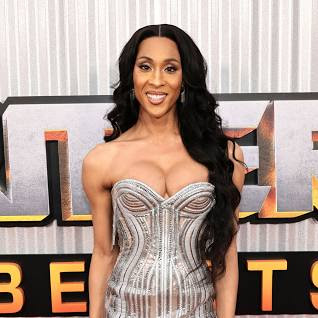
  • The Terrorcon Nightbird is voiced by Michaela Jae Rodriguez, making her the first openly transgender person to give voice to a Transformers character. This is awesome!
M.J. Rodriguez, who voices Nightbird.

  • David Soblolov is the only Beast Wars alum to return for this film. He had a memorable performance as Depth Charge in the tv series and here lends his talents to Rhinox, Battletrap, and Apelinq. He also voiced Blitzwing in the Bumblebee movie. I met him at TFCon a few years back. He's a helluva nice guy, and I'm glad to see him involved in this film.

  • I can't say enough how much I loved the pairing of Mirage and Noah. It's what the first Bay film was going for with Bumblebee and Sam, only this time the robot can talk. Also, the fact that someone besides Bumblebee was in that human liaison role was a big breath of fresh air.

  • Unicron was done very well, even if I didn't like how they seemed to connect him here to his "appearance" in The Last Knight. His planet mode was imposing and looked like his debut performance in Transformers: The Movie. He felt like a real threat, in my opinion.

  • The score and soundtrack were top notch, which is something I must say all seven live action films have in common. Pieces of Arrival to Earth from the first film, as well as Vince DiCola's Unicron's Theme from the animated movie were subtly dropped in, as well. I'm definitely picking up the 90s hip-hop soundtrack! (Even though Mirage mistakenly says, "Wu Tang in the house!" while playing the Notorious B.I.G.)


What Could've Been Better
  • Rhinox and Cheetor are terribly underutilized in this film. Cheetor gets four throwaway lines, and as far as I can tell Rhinox gets no dialogue besides some grunts. These two were seminal characters of Beast Wars, as well as its sequel series Beast Machines. Cheetor was the Bumblebee-type that started out as a cocky, headstrong bot but grew into a leader. Rhinox was both the muscle and brains of the Maximals, often acting as Primal's' right-hand, only to eventually betray his comrades and become one of the best villains in TF history. I wanted more out of these two.

Rhinox as he appeared in Beast Wars.


Cheetor as he appeared in the first season of Beast Wars.

  • The large cast, in general, made it tough for all of the characters to get a chance to shine. This happened with all of the Bay films but was corrected with Bumblebee, which focused on just three Transformers. When it was announced that we would have Autobots, Maximals, and Terrorcons I had a feeling that it was likely several characters wouldn't have much to do, which is exactly what happened here with more than a few bots. Airazor, for example, never transforms, which is always a huge pet peeve of mine in a movie called, you now, TRANSFORMERS!

  • Bumblebee's apparent death at the hands of Scourge is not only spoiled by the trailers, but his return makes very little sense in the context of the story. It's not even clear if he's dead or just in stasis lock. Obviously having him get stabbed by Scourge was meant to raise the stakes, but did anyone actually think the mascot character for this whole film franchise wasn't going to come back? This isn't 1986!
He gets better...somehow.


  • The film had five story credits, and it shows. Nearly all of the dialogue shown in the trailers is missing in the final film, as are a few scenes. Fans learned that an entire scene involving a fight between Prime and a Decepticon called Transit - who turns into...wait for it...a freakin' bus! - was cut near the beginning of the film. Knowing this, it begs the question: what else was left on the cutting room floor? The film even feels rushed in the second half, and I can't help thinking that this was the result of studio interference, something common with Paramount movies, perhaps because they didn't want a two and a half hour slog like so many comic book movies these days. Multiple screenwriters and missing dialogue/scenes between trailer and final film often are clues that things weren't copacetic between the director and studio, and I wouldn't be surprised if that was the case here.

Transit, the Decepticon bus and this movie's true star, who we never got to see.

  • There are a few plot holes that bug me: 
      •  If Unicron can't travel through universes, how did the Terrorcons come to Earth? 
      • Who were the other Maximals that apparently came to Earth with Primal's crew?
      • Who were Scourge, Nightbird, and Battletrap before Unicron found them?
      • Did the humans actually do something to make Prime REALLY not like them?
      • How did the Maximals create the Transwarp Key? Could they make another?
      • Are the Maximals Cybertronian? Are the Terrorcons?
      • Are the Freezers and Scorponoks Terrorcons or Predacons? Are they even sentient?
      • Where are the Decepticons and why are they never mentioned?
      • Where do the Autobots go when the battle is over? 
      • If Mirage can turn into anything, why not a spaceship to get them off Earth?
      • Where is the ship that brought the Maximals to Earth? Can't they use that?
***EDIT: A recent post on TF fan site Seibertron.com shared a number of changes between one of the test screenings and the final film. Several of the plot holes, as well as Optimus Prime’s overall demeanor, are explained by scenes that were removed between the test screenings and the finished product. I don’t know why the changes were made (I still call studio interference), but I feel some of my issues could’ve been mitigated had some of the older material remained in the film. At the very least, Rhinox would’ve actually talked!

Final Thoughts

It's hard for me to fully encapsulate my feelings on Rise of the Beasts. As a Transformers fan, I want to see nearly every aspect of the franchise succeed. However, it always bothers me when it feels like those who are in charge don't understand what made the original story - and Beast Wars, for that matter - so special. It wasn't the war, or the blows-em-upsies, or any of the machismo that gave rise to Transformers and other cartoons targeted at boys during the height of the Cold War. It was the characters. Thanks to the profiles written for Marvel Comics by Bob Budiansky and the superb voice actors directed by Wally Burr, the 80s cartoon had heart, humor, and character-driven stories, even if they were designed to sell toys in 22 minutes. That carried over into Beast Wars, when writers Bob Forward and Larry DiTillio focused on a character-rich story that flew in the face of Hasbro's "Sell more toys!" mandate and resulted in what may be the most beloved Transformers cartoon series of all time. These qualities can be found in other examples like the comics done by IDW Publishing from 2005-2021, and the much-beloved Transformers: Animated that aired from 2007-2009 (with voice direction by Sue Blu, the original Arcee, as well as the voice director on Beast Wars). A good Transformers story understands the humanity of the bots - that they can think and feel and love and cry. The best parts of the franchise do this, and Rise of the Beasts does have moments, however fleeting,  when it captures that magic.

But the live action movies as a whole have missed the point again and again. I'll admit that in 2007 I walked away from the theatre thrilled to have seen Optimus Prime on the big screen. But at the same time, it felt like it wasn't really the Transformers' story. As those films continued, it was clear that everyone from Michael Bay to producer Lorenzo di Bonaventura not only didn't understand the basic fundamental parts of the Transformers franchise, but they flat out didn't care. Transformers is a series that is constantly reinventing itself, and that's fine. Hell, it's in the name! But reinvention doesn't mean completely forgetting what made the thing special in the first place. And there are, at least for me, some moments when Rise of the Beasts does this too - especially in the portrayal of Optimus Prime, and the damn-near criminal lack of screentime for the titular beasts themselves.

In the end, Rise of the Beasts does manage to get more right than wrong. It does continue to display the heart and humor that Bumblebee had. The robot designs, which had been a harsh criticism going back to the first film, seemed to take a step back, looking a bit more like they came from the Michael Bay School of Making Robots Look as Weird as Possible, but they were still not as egregious as, say, Skids and Mudflap from Revenge of the Fallen. The human storyline is one of the best that we've ever seen, and though it didn't feel like they totally nailed Prime's story arc, at least this film tried to offer a more relatable portrayal of the most famous Autobot of all time. I really did want to love this film. But the elements that were kept from the Bay films and clear indication that the studio is unwilling to move on from them, together with the many gaping plot holes and non-sensical moments, were too hard to ignore. I guess I've just been hurt too many times.


Score

If you made it this far, congratulations! As a reward, I'll give an actual score to Rise of the Beasts for those of you who like such things. 

The movie gets a solid 7/10 for me. 

As for where it ranks among the live action Transformers films, that’s tricky. It is miles ahead of most of the Bay films, even though I still give a slight edge to the first one due to the storyline making a bit more sense and the ambitious scale that that film was going for (and somehow managed to achieve). However, I still give the top spot to Bumblebee, which is a film that I feel nails everything good about the Transformers franchise as a whole:
  1. Bumblebee
  2. Transformers
  3. Rise of the Beasts 
  4. Dark of the Moon
  5. Revenge of the Fallen
  6. The Last Knight
  7. Age of Extinction
Of course, none of them can stand up to the 1986 animated classic. They have neither the touch, nor the power.


The greatest scene in the history of cinema.


Till all are one!

-Father Prime 


NOTE: all images are courtesy of www.TFWiki.net